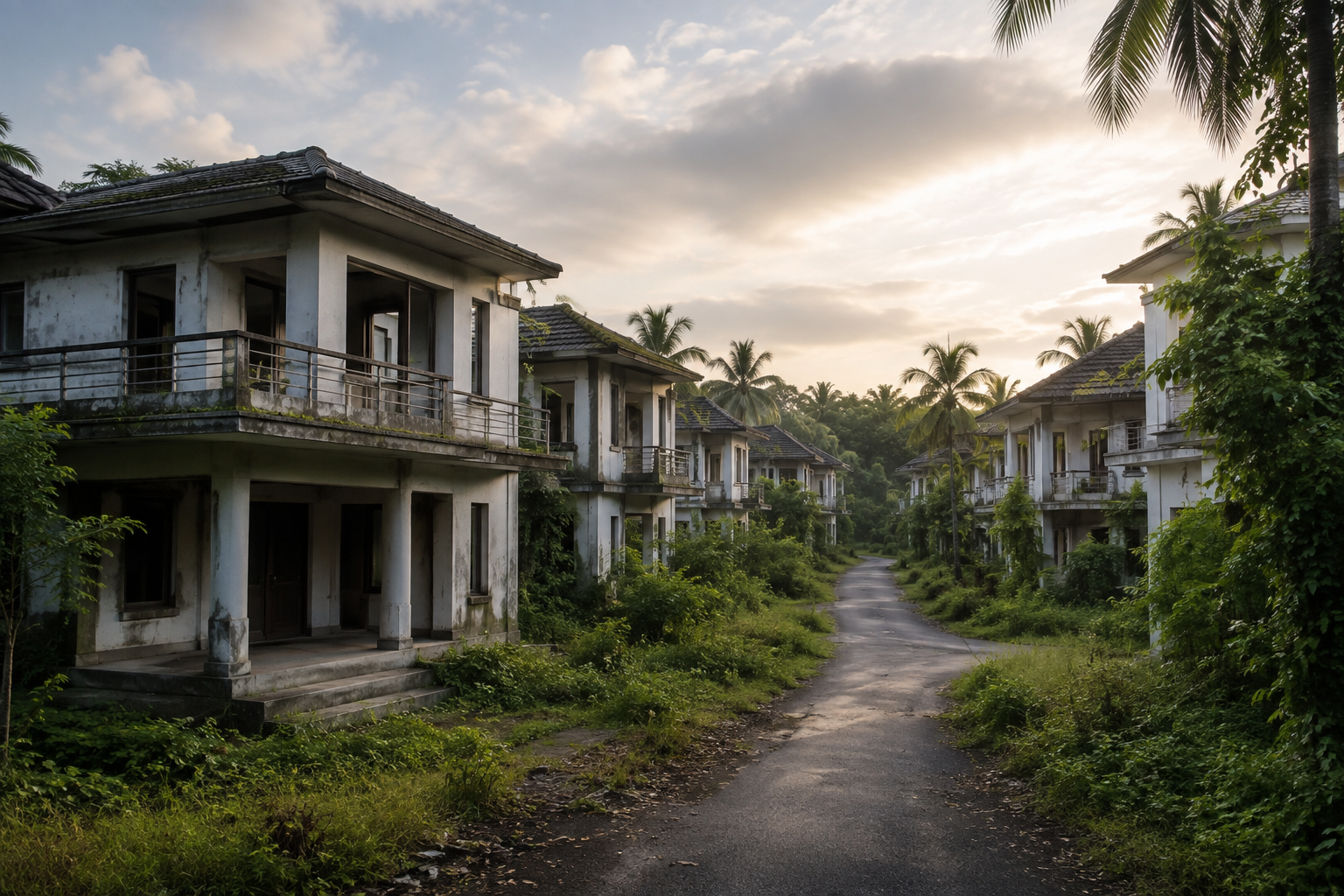
18 Lakh Empty Houses in
Kerala: Could Idle Properties Become the State’s Next Real Estate Opportunity?
Kerala’s
real estate market may be sitting on a huge opportunity that is often
overlooked: millions of houses that remain unoccupied for much of the year.
Kerala
had around 18 lakh unoccupied houses as of 2022, representing
approximately 10.6% of the state’s housing stock based on the 2011
Census. A significant share of these homes is believed to have been built by
Non-Resident Indians (NRIs).
For a
state where land and houses have traditionally been among the preferred forms
of investment, this raises an important question:
Can
Kerala turn these locked-up properties into productive real estate assets?
Why Does Kerala Have So Many Empty Houses?
For
generations, Malayalis living abroad have invested their earnings in land and
houses back home.
Building
a spacious house in one's native place has often represented financial success,
family security and the dream of eventually returning home. But when families
continue to live abroad, many of these properties remain locked for most of the
year.
The
problem is particularly relevant for NRI property owners who may visit Kerala
only occasionally.
Their
properties still require:
- Regular maintenance
- Security and monitoring
- Cleaning
- Utility management
- Property inspections
- Repairs
- Tenant management, if rented
Without
someone trustworthy to manage these responsibilities, many owners prefer to
keep their properties vacant.
A Huge "Shadow Inventory" in Kerala Real
Estate
These
vacant houses can be considered a form of shadow inventory.
The
properties physically exist, but they are not actively participating in the
real estate market.
They are
neither generating rental income nor being used for commercial purposes. At the
same time, they continue to require maintenance and may gradually lose value if
they remain unattended.
This
creates an interesting opportunity for Kerala's property management industry.
A
professionally managed property could potentially be transformed from an idle
asset into an income-generating one while allowing the owner to retain
ownership.
The NRI Property Management Opportunity
One of
the biggest opportunities could be the development of a stronger NRI
property management ecosystem.
Imagine a
service where an NRI property owner can hand over an entire property to a
professional company.
The
service could include:
- Property verification
- Regular inspections
- Maintenance and repairs
- Tenant verification
- Rent collection
- House cleaning
- Security monitoring
- Utility bill management
- Documentation assistance
- Periodic property reports
Such a
system could provide overseas owners with greater confidence while creating a
new recurring-revenue business for property management companies.
Could Empty Houses Become Tourist Accommodation?
Tourism
is another area where vacant houses could play a role.
Kerala
attracts both domestic and international travellers, and accommodation demand
is not limited to major cities and established tourist destinations.
Suitable
homes in scenic or strategically located areas could potentially be converted
into:
Homestays
| Holiday Homes | Serviced Villas | Short-Term Rentals | Boutique Accommodation
Technology Could Change How Vacant Properties Are
Managed
Technology
can make remote property ownership much easier.
For
example, an NRI owner could potentially monitor their property from anywhere in
the world through:
- Smart security cameras
- Remote monitoring
- Smart locks
- IoT-based systems
- Digital maintenance records
- Online rent collection
- Automated alerts
- Scheduled property
inspections
This
could reduce one of the biggest concerns of overseas property owners: "Who
is looking after my property while I am abroad?"
Insurance and Security Could Become New Real Estate
Services
Vacant
properties also create opportunities beyond traditional real estate.
Homes
that remain empty for long periods may require specialised security and
insurance solutions.
This
could create demand for:
Vacant-property
insurance, smart security systems, remote surveillance, inspection services and
emergency maintenance.
As
Kerala's property management ecosystem becomes more organised, these services
could increasingly become part of a complete property-management package.
The Bigger Issue: Kerala's Investment Pattern
The
vacant-house phenomenon also highlights a broader issue with Kerala's
investment culture.
Remittances
have played a major role in the state's economy. Kerala's remittance inflows
increased from approximately ₹85,092 crore in 2018 to ₹2,16,893 crore in
2023.
But a
considerable amount of wealth has traditionally been directed towards land and
residential construction.
A house
can provide security and long-term appreciation, but an unused house does not
necessarily generate regular economic activity.
This
creates a unique paradox:
Kerala
has substantial property wealth, but a portion of that wealth remains
economically inactive.
What Could Be Done?
Unlocking
this potential will require cooperation between property owners, real estate
companies, technology providers and policymakers.
Some
possible solutions include:
1. Professional Property Management
Trusted
property-management companies could provide end-to-end services for NRI owners.
2. Better Rental Ecosystems
A
stronger and more transparent rental framework could encourage more homeowners
to lease vacant properties.
3. Tourism Integration
Suitable
houses could potentially become part of Kerala's wider tourism accommodation
network.
4. Technology-Based Monitoring
Smart
security and remote monitoring can make it easier for owners to manage
properties from overseas.
5. Financial Solutions
There may
also be opportunities to develop financial products that allow suitable
property assets to support productive investment, subject to regulatory and
lending requirements.
What Does This Mean for Kerala's Real Estate
Market?
The story
of Kerala's 18 lakh vacant houses is not simply about empty buildings.
It is
about unused capital.
Every
vacant house represents land, construction investment, infrastructure and
maintenance expenditure that has already taken place.
If even a
small portion of these properties can be brought into productive use, the
impact could extend beyond property owners.
It could
support:
- Rental housing
- Tourism
- Property management
- Construction and maintenance
services
- Security technology
- Insurance
- Local employment
- Small businesses
The
opportunity therefore goes beyond buying and selling properties.
A New Opportunity for NRI Property Owners
For NRIs,
the question may no longer be simply:
"Should
I keep my house locked?"
Instead,
the question could become:
"How
can I make my property work for me while I am living abroad?"
Depending
on the property's location, condition and legal suitability, options could
include long-term rental, managed holiday accommodation, redevelopment, sale or
professional property management.
The right
choice will vary from property to property.
Kerala's Idle Houses Could Become Productive Assets
Kerala's
estimated 18 lakh unoccupied houses represent a significant untapped real
estate resource.
The
challenge is converting ownership into productive use.
With
better property management, stronger rental systems, technology, tourism
opportunities and appropriate policy support, some of these homes could move
from being locked-up assets to income-generating properties.